There is a dark, shameful secret hiding on the workbench of nearly every electronics maker. It is the “Miscellaneous Drawer.”
It starts innocently enough. You buy a 1000-piece resistor kit and a handful of LEDs for a Capstone Project. You finish the build, and instead of putting the remaining parts away, you sweep them into a random plastic tub. Fast forward six months, and you are spending 45 minutes digging through a tangled bird’s nest of jumper wires, bent capacitors, and unlabeled ICs, desperately trying to find a single 10k resistor. It feels like panning for gold in a river of sadness.
Stop living like a raccoon. Proper component storage isn’t just about aesthetics; it is about preserving your sanity and keeping your workflow moving.
Today, we are looking at the three distinct tiers of electronics organization: the classic drawer cabinet, the portable tackle box, and the ultra-nerdy SMD component book. Let’s get organized.
1. The Classic Workbench Staple: Akro-Mils 44 Drawer Cabinet
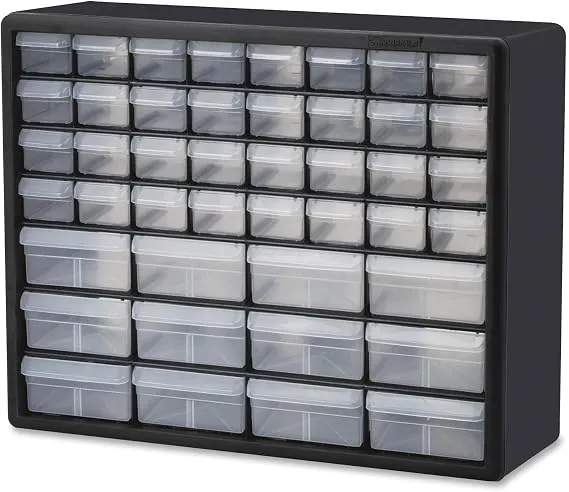
If you picture a traditional electronics lab, this is what is sitting on the wall. The Akro-Mils plastic drawer cabinet is the undisputed king of bulk through-hole component storage.
- Best For: A permanent workbench setup, storing resistors, capacitors, LEDs, and small hardware.
- Why it matters for Beginners: When you are learning the ropes, you tend to buy large, cheap assortment kits. Having 44 distinct drawers allows you to dedicate a row to resistors, a row to capacitors, and a row to Microcontrollers. It provides immediate visual access—you can see exactly what you have without opening a lid. Get yourself a Label Maker and go to town.
- The Catch: They aren’t portable. If you bump the cabinet hard enough, or god forbid, drop it, you will be playing 52-card pickup with 4,000 tiny parts. The drawers also aren’t perfectly sealed, so very fine items (like tiny SMD parts) can migrate.
Where to get it: Akro-Mils 44 Drawer Hardware Cabinet
2. The Portable Pro: Plano ProLatch Stowaway
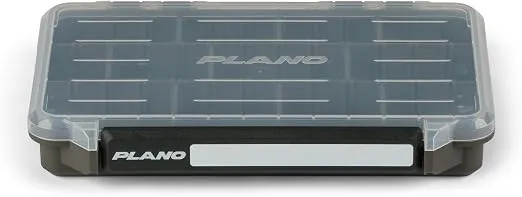
Yes, it is literally a fishing tackle box. But the Plano ProLatch system has been co-opted by the maker community for a very good reason: it is the perfect modular storage solution for tools, modules, and larger components.
- Best For: Makers on the move, robotics clubs, and storing larger items like Arduinos, sensors, and Soldering Tools.
- Why it matters for Pros/Enthusiasts: These boxes feature adjustable dividers, meaning you can create long slots for jumper wires and square slots for chunky relay modules. The ProLatch system seals tightly against the lid, preventing parts from mixing even if the box is turned upside down in a backpack.
- The Catch: It requires you to pull the box off a shelf, unlatch it, and open the lid every time you need a part, which is slightly slower than just reaching into a wall cabinet.
Where to get it: Plano ProLatch Stowaway
3. The Ultra-Nerdy Micro Organizer: SMD Component Book
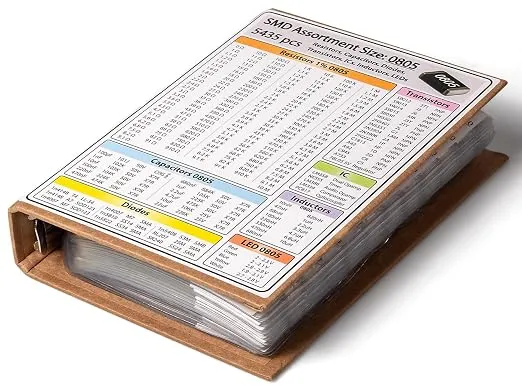
As you graduate from through-hole components on breadboards to designing your own custom PCBs, you will encounter Surface Mount Devices (SMD). These components are roughly the size of a grain of sand. Putting them in a standard drawer is a recipe for disaster. You need a book.
- Best For: Advanced makers, PCB designers, and anyone working with 0805, 0603, or 0402 surface mount resistors and capacitors.
- Why it matters for Pros: An SMD component book looks like a small photo album. Inside, the pages are lined with tiny, labeled pockets designed to hold strips of SMD tape. This specific book comes pre-populated with a massive assortment of 0805 resistors and capacitors. It is the only sane way to organize thousands of microscopic components without losing them to a gentle breeze.
- The Catch: It is completely useless for anything other than SMD tape strips. Don’t buy this unless you are ready to use ESD Tweezers and a hot air rework station.
Where to get it: SMD SMT Component Book 0805
The Verdict
If you are just setting up a permanent desk for your Arduino projects, buy the Akro-Mils Cabinet and a label maker. It is a rite of passage.
If you like to take your projects to a makerspace or the living room couch, grab a stack of Plano ProLatch boxes.
And if you are designing your own PCBs, the SMD Component Book isn’t just a suggestion—it is a mandatory survival tool.