Welcome to Lesson 107! We’ve already met the Capacitor, which hoards energy in an electric field. Today, we meet its magnetic cousin: the Inductor.
If a capacitor is like a water tank storing pressure, an inductor is like a heavy water wheel in a river. It takes a lot of effort to get it spinning, but once it’s moving, it is very hard to stop.
How Inductors Work
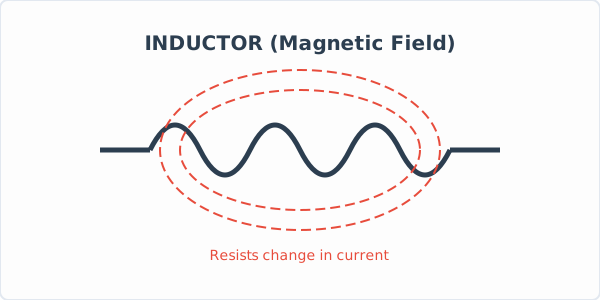
An inductor is essentially just a coil of wire (often wrapped around a magnetic core). When current flows through this wire, it creates a magnetic field.
Here is the magic trick: Inductors hate change.
- If you suddenly turn the power ON, the inductor fights the current, using the energy to build its magnetic field. (It resists the sudden increase).
- If you suddenly turn the power OFF, the magnetic field collapses, releasing a sudden surge of voltage back into the circuit to try and keep the current flowing. (It resists the sudden decrease).
Where Do We Use Inductors?
Because they hate sudden changes in current, they are incredibly useful for two main things:
1. Filtering (Chokes) If you have a “noisy” power supply with lots of high-frequency spikes and dips, placing an inductor in the line will smooth it out. It “chokes” out the fast changes, only letting the steady DC current through.
2. Voltage Boosting (Boost Converters) Remember that collapsing magnetic field? When you cut the power to an inductor, it releases a voltage spike that can be higher than the original voltage you put into it! By rapidly pulsing an inductor on and off using a Transistor, we can turn a 3.7V battery into a steady 5V output. This is how USB power banks work!
The Flyback Danger
That voltage spike is useful if we want it, but deadly if we don’t. Motors and relays are essentially giant inductors. When you turn off a motor, the collapsing magnetic field sends a massive voltage spike backward that can instantly destroy your Arduino.
This is why we always pair inductive loads with a Flyback Diode—to give that angry spike a safe loop to travel through until it dissipates!
Recommended Gear:
- Inductor Assortment Kit - Great for building custom filters and boost circuits.
- Breadboard Power Supply Module