USB Testers Showdown: Keweisi vs. MakerHawk vs. FNIRSI FNB58
There is a unique brand of despair reserved for the moment you plug your freshly soldered 5V Arduino project into a random USB wall wart you found in a kitchen drawer, only to watch it endlessly reboot while emitting a faint, high-pitched whine of agony. Is the power supply garbage? Is the cable bad? Did you create a dead short? Did the magic blue smoke decide to take a preemptive vacation?
Before you angrily toss your project across the room and swear off electronics forever, you need a USB tester. These little dongles sit between your power source and your project, acting like an accountant for your electrons, tracking exactly what voltage and current is flowing. Today, we’re pitting three USB testers against each other: the ultra-budget Keweisi, the mid-range MakerHawk, and the absurdly over-engineered FNIRSI FNB58.
1. Keweisi Digital USB Tester (The Ultra-Budget Option)
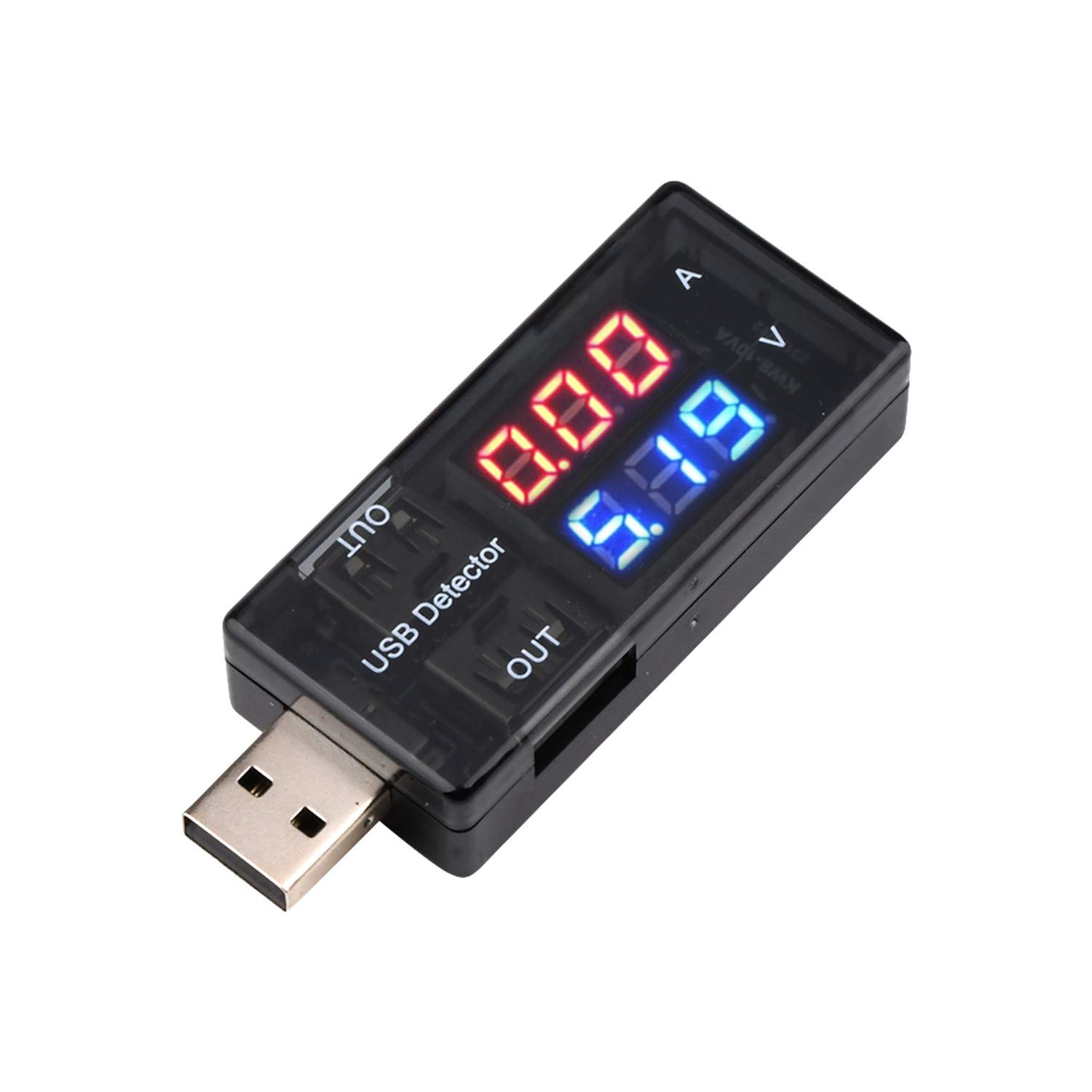
The Keweisi tester is the definition of “cheap and cheerful.” It costs less than a decent cup of coffee and does exactly one thing: tell you if your USB port is alive.
Key Features:
- Basic Readouts: Displays Voltage (V), Current (A), Capacity (mAh), and Time on a simple backlit LCD screen.
- Form Factor: Only works with USB-A ports (no USB-C here).
- Price: Extremely cheap.
Why it matters for Beginners vs. Pros:
- Beginners: If you just want to know if your Raspberry Pi is actually pulling 2.5 Amps or if your dollar-store phone charger is lying about its 5V output, this is all you need. It’s perfect for simple diagnostics.
- Pros: You’ll outgrow this immediately. It lacks USB-C support, doesn’t do fast-charge triggering (QC/PD), and isn’t accurate enough for precision low-current sleep mode testing.
Get it here: Keweisi Digital USB Tester on Amazon
2. MakerHawk USB Meter (The Mid-Range Workhorse)
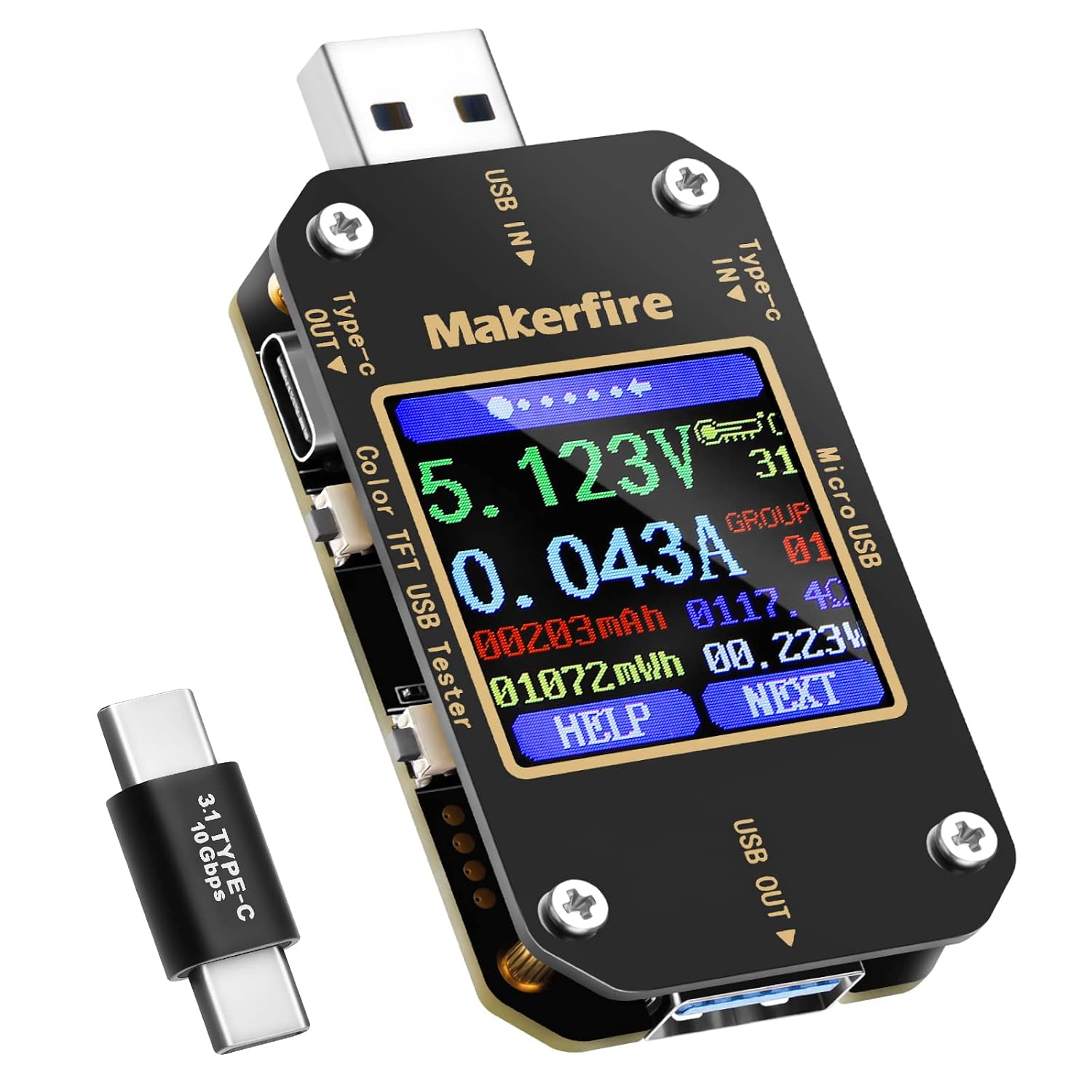
The MakerHawk is the sweet spot for most Arduino and ESP32 hobbyists. It bridges the gap between basic voltage checks and modern USB-C power delivery (PD) systems.
Key Features:
- Color Screen: A tiny, bright IPS display that shows a wealth of information, including power (Watts) and resistance (Ohms).
- Multiple Inputs/Outputs: Includes both USB-A and USB-C ports, meaning you can test modern power banks and Type-C microcontrollers.
- Fast Charge Recognition: Can identify if a charger is using Qualcomm Quick Charge (QC) 2.0/3.0, Apple 2.4A, or basic USB PD.
Why it matters for Beginners vs. Pros:
- Beginners: It’s a great step up. If you are building battery-powered ESP32 projects and need to measure exactly how many mAh your battery bank actually holds, the MakerHawk makes it easy.
- Pros: It handles most daily tasks well, but the interface can be clunky to navigate with its single button, and it lacks the advanced graphing capabilities needed to catch split-second current spikes when a WiFi module wakes up.
Get it here: MakerHawk USB Meter on Amazon
3. FNIRSI FNB58 (The Over-Engineered Power Tool)
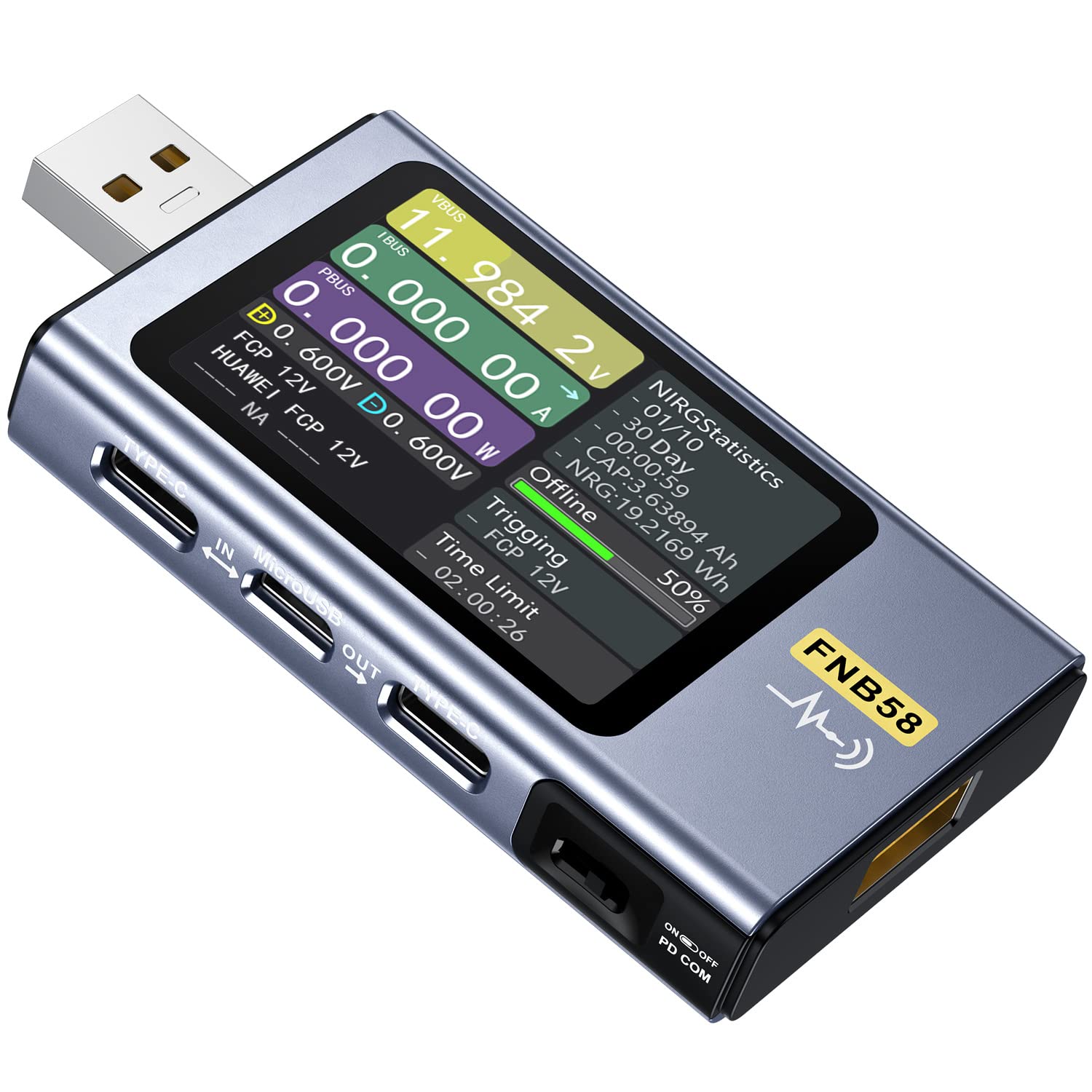
The FNIRSI FNB58 isn’t just a USB tester; it’s a miniature oscilloscope dedicated entirely to USB power. It has a gravity sensor so the screen rotates when you turn it, which tells you everything you need to know about its level of over-engineering.
Key Features:
- Massive 2.0-inch Screen: A giant, beautiful display that draws real-time voltage and current graphs.
- Protocol Triggering: It can actively “talk” to smart chargers and force them to output specific voltages (e.g., forcing a 20V output from a USB PD charger to power a custom laptop project).
- PC Connectivity: Connect it to your computer via Bluetooth or USB to log data over time, perfect for analyzing deep-sleep power consumption cycles.
Why it matters for Beginners vs. Pros:
- Beginners: Honestly, it’s overkill. You’ll be paying for features (like protocol spoofing and ripple measurement) that you won’t use for a long time. Stick to the MakerHawk.
- Pros: This is the Holy Grail. When you are trying to optimize an ESP32 to run for two years on a coin cell battery, you need the FNB58’s PC data logging and micro-amp accuracy to see exactly what happens during a 50-millisecond wake cycle.
Get it here: FNIRSI FNB58 on Amazon
The Verdict
If you are just getting started with basic 5V Arduino circuits, the Keweisi is a fun stocking stuffer. For the vast majority of makers working with ESP32s and modern USB-C batteries, the MakerHawk is the perfect balance of price and capability. But if you are doing serious battery optimization or building custom USB-C PD hardware, drop the cash on the FNIRSI FNB58 and never look back.
(Don’t forget to check out our Multimeters Showdown for more diagnostic tools!)