Soldering & Anti-Static Mats Showdown: Finding Your Perfect Work Surface
If you’ve ever melted a hole in your dining table or fried a microcontroller with a stray spark of static electricity, you know how crucial a proper work mat is. The days of soldering on a piece of greasy cardboard are over! A good mat protects your desk from searing heat and keeps tiny screws from rolling into the abyss. Should you get silicone, a portable pad, or a professional ESD mat? Let’s compare.
1. iFixit Portable Anti-Static Project Mat (Best for Repairs on the Go)
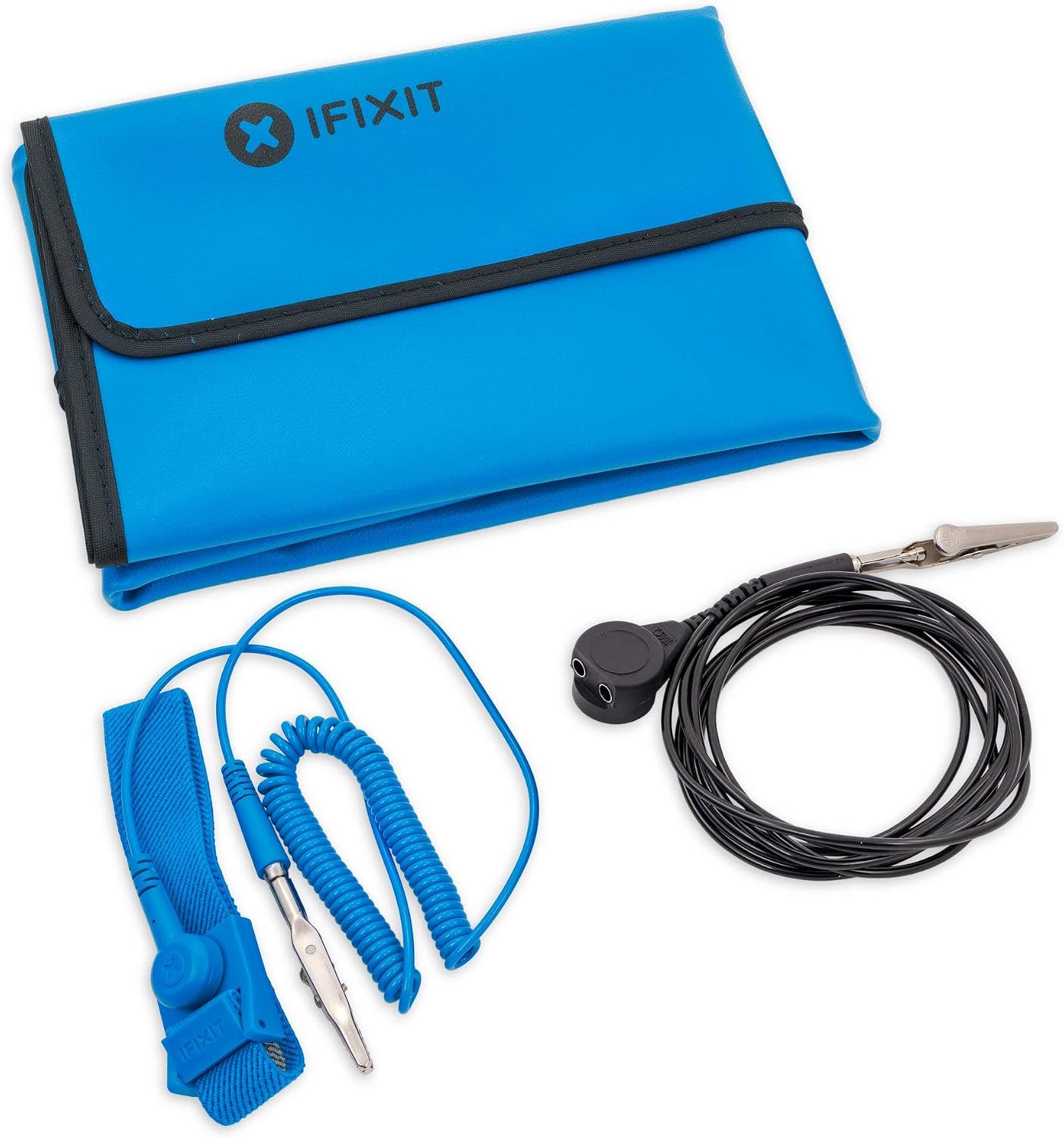
If you find yourself fixing laptops or building Arduino projects on the kitchen table and then having to pack it all away, the iFixit Portable Anti-Static Mat is built exactly for you.
Why it stands out:
- True ESD Protection: It comes with a built-in grounding wire and an alligator clip or wrist strap connector. This ensures you won’t accidentally discharge static into sensitive ICs.
- Highly Portable: It folds up easily and fits perfectly into a backpack.
- Built for Organization: While it doesn’t have deep trays, it has a slightly grippy surface that prevents screws from rolling too far.
The Trade-offs:
- Not Heat Resistant: This is an anti-static mat, not a soldering mat. If you drop a blob of molten solder on it, it will melt.
- Size: It’s compact. Perfect for a single laptop or a breadboard project, but not meant to cover your whole desk.
Verdict for Beginners vs. Pros:
- Beginners: Great if you are mostly snapping together parts, handling sensitive sensors, or opening up phones.
- Pros: It’s a specialized tool for IT repair techs on the move, not for heavy bench work.
2. Kaisi Magnetic Silicone Soldering Mat (Best for Heavy Soldering)
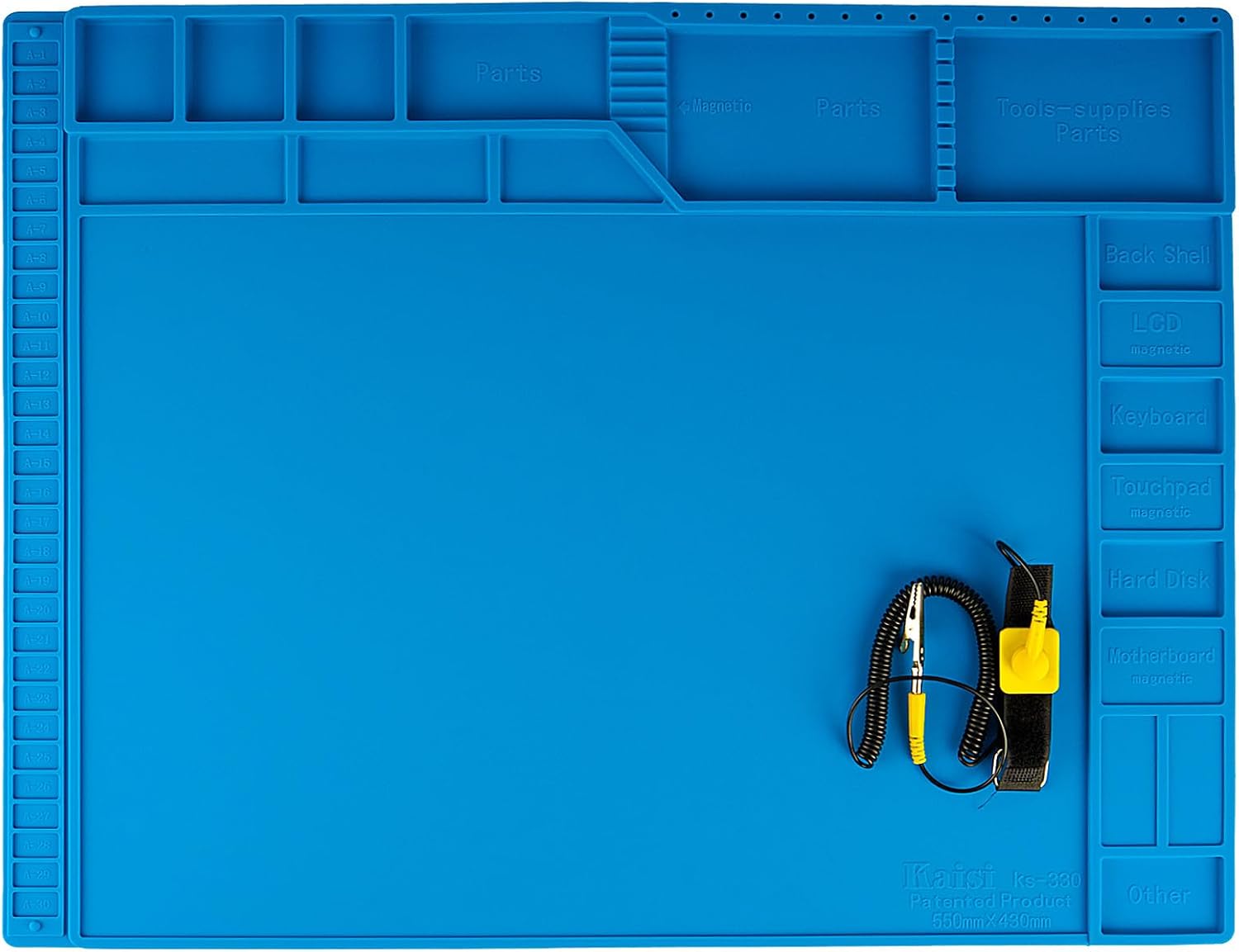
If you are wielding a soldering iron, the Kaisi Magnetic Silicone Mat is practically mandatory. Made from high-grade silicone, this beast can withstand temperatures up to 500°C (932°F).
Why it stands out:
- Heat Immunity: You can rest your soldering iron directly on it. Molten solder blobs peel right off once they cool.
- Built-in Organization: It features dozens of tiny numbered compartments, slots for screwdrivers, and magnetic areas to hold onto those infuriatingly tiny M2 screws.
- Chemical Resistant: Flux spills and isopropyl alcohol wipes won’t degrade the material.
The Trade-offs:
- No True ESD Protection: While silicone is an insulator, it does not safely dissipate static electricity to the ground like a true ESD mat.
- Can Be Bulky: The thick silicone and molded compartments mean it doesn’t lay flat if you try to roll it up. It’s meant to live permanently on a desk.
Verdict for Beginners vs. Pros:
- Beginners: The absolute best first buy if you are learning to solder. It saves your desk and keeps you organized.
- Pros: Every professional maker has one of these in the center of their bench specifically for soldering tasks.
3. Bertech ESD Mat Kit (Best for Professional Workbenches)
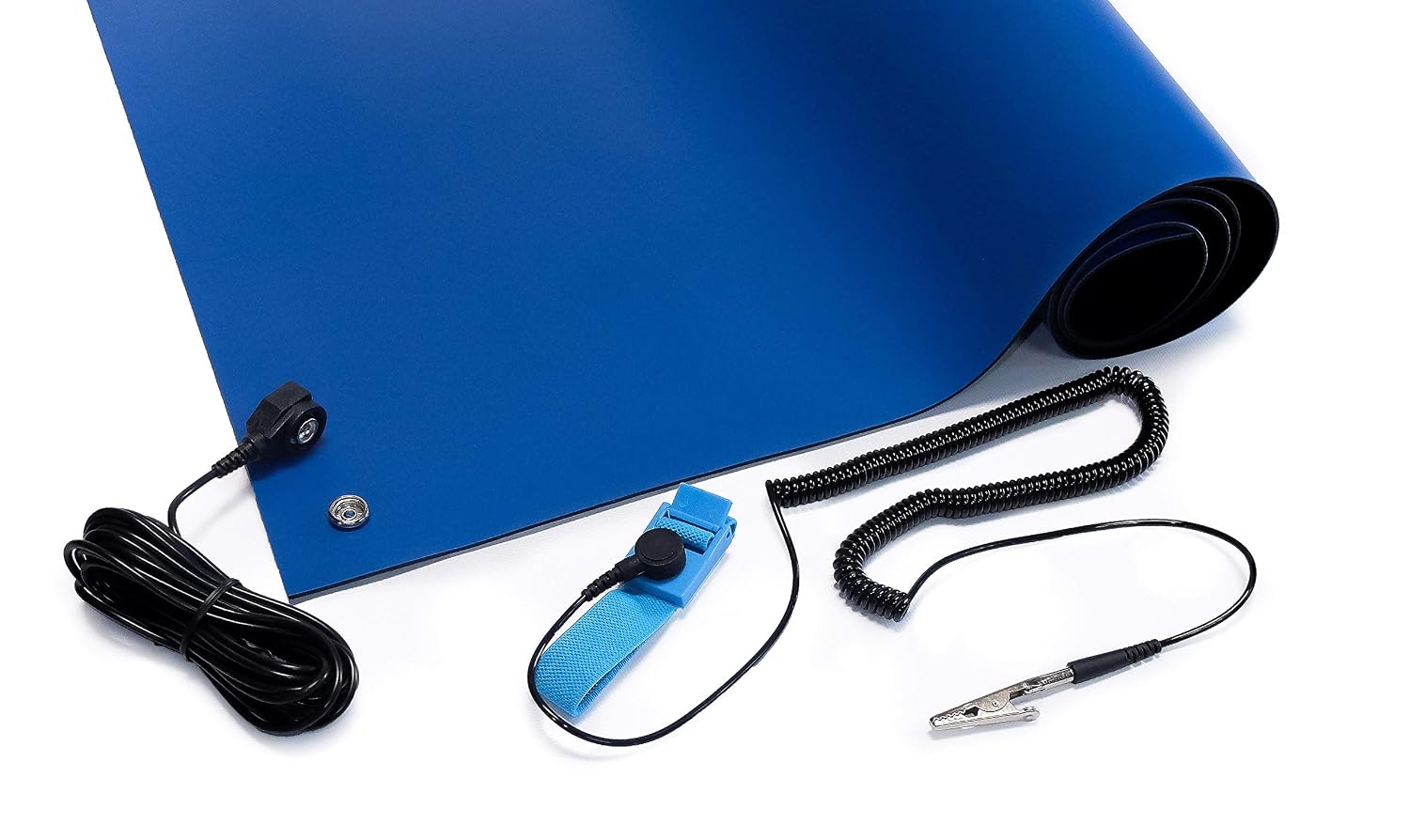
When you are ready to dedicate a permanent desk to your electronics lab, the Bertech ESD Mat is the industry standard. It’s designed to cover your entire work surface.
Why it stands out:
- Professional Grade ESD Safety: This is a thick, two-layer mat. The top layer dissipates static, and the bottom conductive layer ensures it flows safely down the included grounding cord.
- Durability: It is resistant to chemicals, solder flux, and general wear-and-tear.
- Size Options: It comes in massive rolls or pre-cut sizes big enough to cover an entire table.
The Trade-offs:
- Moderate Heat Resistance: It can handle the occasional solder splash or a quick touch from an iron without burning a hole, but you shouldn’t rest your iron on it directly like you can with silicone.
- Zero Organization: It is perfectly flat. There are no built-in trays or magnetic screw holders.
- Price and Setup: It’s an investment, and you have to properly ground it to an outlet for it to work.
Verdict for Beginners vs. Pros:
- Beginners: Probably overkill unless you are setting up a dedicated electronics desk right away.
- Pros: Essential for anyone working with sensitive, expensive components on a daily basis.
Final Recommendation: Which Should You Buy?
- For the Soldering Beginner: Get the Kaisi Magnetic Silicone Mat. The heat resistance and organization compartments are lifesavers when you are first learning to wrangle wires and hot tools.
- For the “Kitchen Table” Maker: If you are mostly doing assembly, Raspberry Pi/Arduino wiring, or PC repair, the iFixit Portable Anti-Static Mat gives you peace of mind that you won’t zap your expensive parts, and packs away cleanly.
- For the Permanent Lab: The ultimate setup is a Bertech ESD Mat Kit covering your desk, with a smaller Kaisi silicone mat sitting on top for specifically messy soldering jobs!