Helping Hands Showdown: Budget vs. Premium Workbench Tools
Soldering electronics requires precision, and you quickly realize that two hands aren’t enough when you’re trying to hold a PCB, a wire, and a searing hot iron all at once. That’s where “helping hands” come in. Today we’re comparing the classic budget alligator-clip option against a premium magnetic flexible-arm workbench to see which one won’t constantly tip over and ruin your day.
The Budget Classic: Neiko Helping Hands
If you’ve ever bought a basic soldering kit, you’ve seen this design. It features a heavy cast-iron base, a crossbar, and two alligator clips on ball joints.
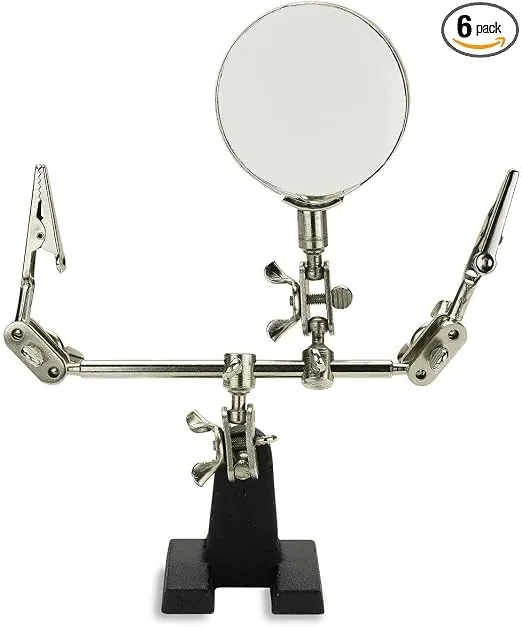
Pros:
- Affordable: Usually costs under $15.
- Heavy Base: The cast-iron base keeps it relatively stable for small components.
- Magnifying Glass: Most models come with a built-in magnifying glass for detail work.
Cons:
- Limited Articulation: The ball joints can be finicky to position perfectly.
- Tips over easily: If you’re working on a larger PCB, the whole unit is prone to tipping.
- Hard on Wires: The alligator clips have sharp teeth that can strip wire insulation if you aren’t careful (pro-tip: wrap the teeth in heat-shrink tubing).
Check out the Neiko Helping Hands on Amazon
The Mid-Tier Contender: KOTTO Third Hand Soldering Tool
A step up from the base cast-iron models, the KOTTO brings flexible arms into the mix without breaking the bank.
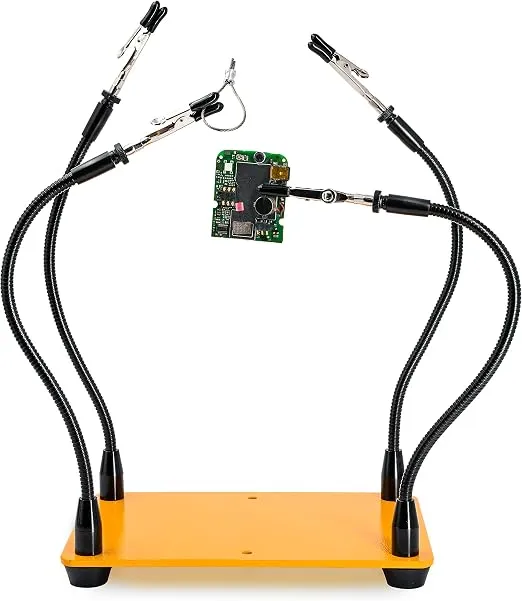
Pros:
- Flexible Arms: Much easier to articulate than ball joints.
- Solid Aluminum Base: Weighted base with rubber feet to prevent slipping.
- Alligator Clips: Can be rotated 360 degrees and locked in place.
Cons:
- Fixed positions: Arms are threaded into fixed holes on the base, limiting versatility compared to magnetic solutions.
Check out the KOTTO Third Hand Soldering Tool on Amazon
The Premium Upgrade: QuadHands Workbench
When you move from basic wire splicing to populating full PCBs, the classic design shows its limits. The QuadHands Workbench takes a completely different approach. It uses a heavy steel base plate with four flexible, magnetic gooseneck arms.
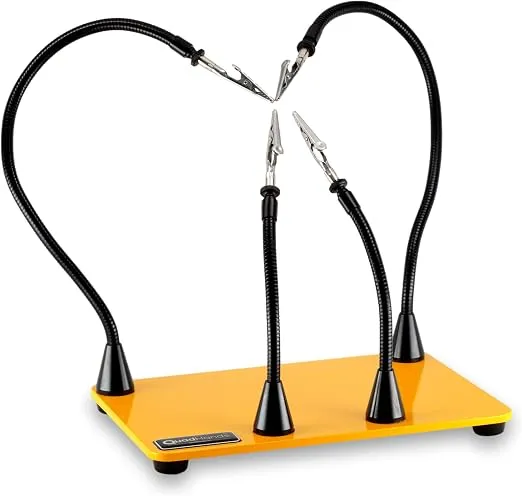
Pros:
- Ultimate Flexibility: The gooseneck arms can be bent into almost any shape and stay put.
- Magnetic Bases: You can move the arms anywhere on the steel plate to accommodate huge custom boards.
- Gentle Clips: The stainless steel alligator clips come pre-covered with silicone, protecting your delicate components and wires.
- Rock Solid: The massive steel base won’t tip over, period.
Cons:
- Price: It’s significantly more expensive than the budget models.
- Footprint: The heavy steel base takes up a lot more permanent desk space.
Check out the QuadHands Workbench on Amazon
The Verdict: Beginner vs. Pro
For the Beginner: If you are just starting out, learning to solder discrete components, or doing basic wire repairs, the Neiko Budget Helping Hands is all you need. It gets the job done and leaves you with budget left over for a better soldering iron.
For the Pro/Intermediate: Once you start designing your own PCBs, building keyboards, or working on complex microcontrollers, the constant re-adjustment of the budget clamps becomes maddening. The QuadHands Workbench pays for itself in time saved and frustration avoided. The magnetic arms are an absolute game-changer for irregular board shapes.