Welcome back to the workbench! Anyone who has picked up a soldering iron knows the truth: if you solder, you will eventually make a horrible mistake and need to desolder. Having the right desoldering tool is the difference between a clean extraction and a completely ruined PCB pad. Today, we look at the Engineer SS-02, Chemtronics Soder-Wick, and the mighty Hakko FR-301. Let’s dive in and see which tool is best at fixing your regrets.
The Manual Precision: Engineer SS-02 Solder Sucker
When you first start out, you probably used the cheap plastic solder sucker that came free with your $15 soldering iron kit. They work, but they kick back like a mule and the hard plastic tip constantly melts or damages components.
Enter the Engineer SS-02 Solder Sucker.
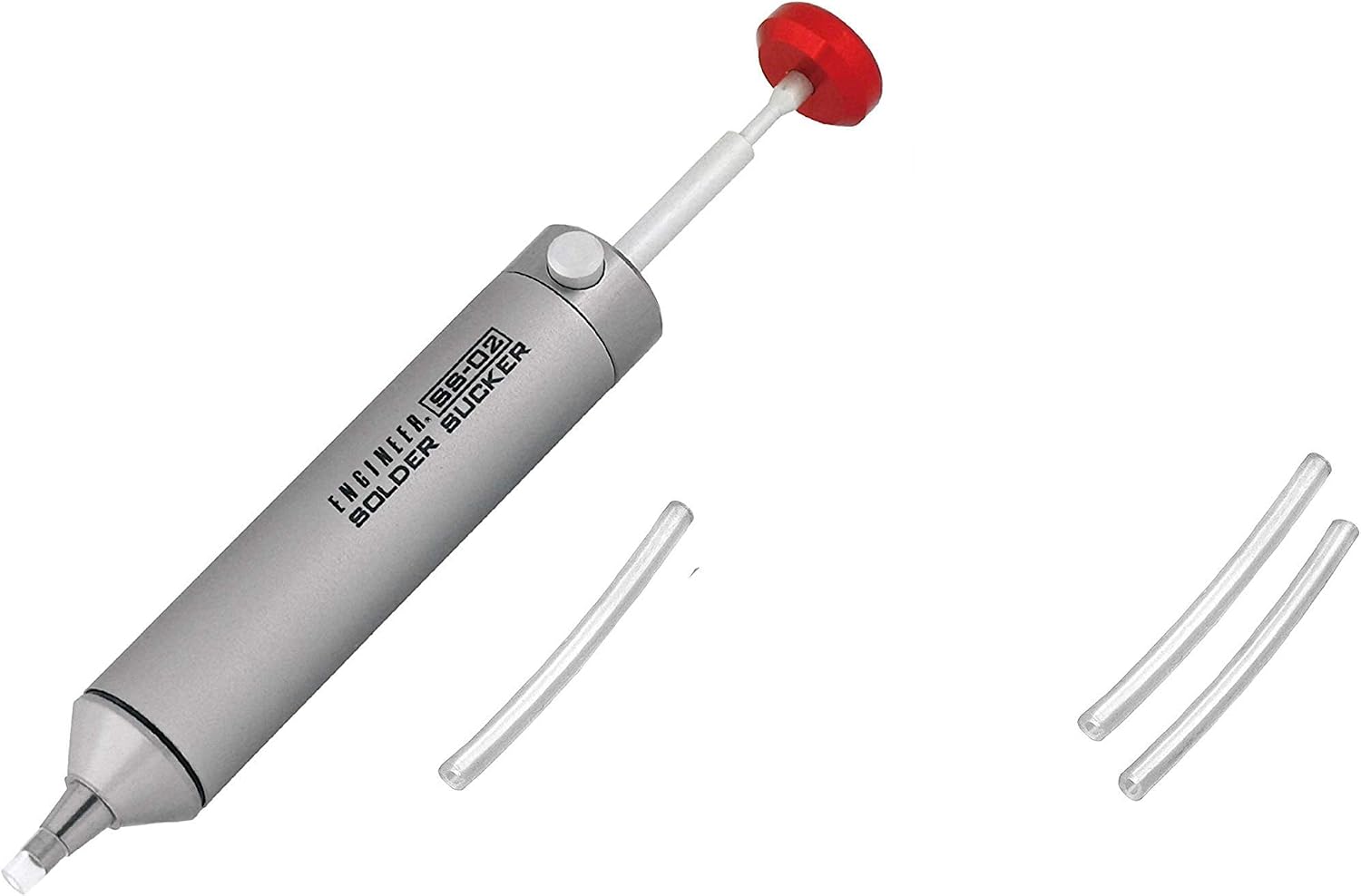
This tool is a legendary upgrade for hobbyists. It is machined from solid aluminum and features a flexible, heat-resistant silicone tip.
Why it matters for Beginners: The silicone tip can be pressed directly over the soldering iron tip and the component leg at the same time. It creates a perfect vacuum seal right over the joint. You don’t have to awkwardly hover a hard plastic tip millimeters above the hot iron.
Why it matters for Pros: It is incredibly durable, and you can easily snip off the tip to expose fresh silicone as it wears out over time. The suction mechanism is extremely smooth and can be operated easily with one hand for extended periods without fatigue.
- Best For: Hobbyists, quick fixes, and through-hole component removal.
- Get it here: Engineer SS-02 on Amazon
The Essential Consumable: Chemtronics Soder-Wick
A solder sucker is great for bulk removal, but what if you’re dealing with tiny Surface Mount (SMD) components, or trying to clean up the microscopic pads on a PCB after the component is gone?
That’s where Chemtronics Soder-Wick Rosin SD comes in.
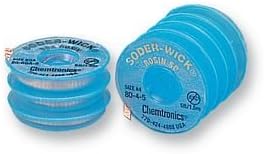
Desoldering braid (or wick) is made of fine copper wire woven together and coated in rosin flux. When you press a hot iron against the wick onto a solder joint, capillary action draws the molten solder up into the copper weave like a sponge.
Why it matters for Beginners: Using cheap, generic wick can be a nightmare because it often lacks flux. It won’t absorb solder and instead just transfers heat to the board, lifting the pad. Chemtronics is the gold standard because it is pre-saturated with high-quality rosin flux. It works instantly.
Why it matters for Pros: The “SD” stands for Static Dissipative. The bobbin is ESD-safe, preventing electrostatic discharge from frying sensitive ICs or microcontrollers as you clean the pads.
- Best For: Cleaning up pads, removing solder bridges, and SMD work.
- Get it here: Chemtronics Soder-Wick on Amazon
The Heavy Artillery: Hakko FR-301 Desoldering Tool
If you’re pulling a single resistor out of an Arduino shield, a manual sucker is fine. But what if you need to desolder a 40-pin DIP IC or recap an entire vintage stereo receiver? Doing that by hand will take hours and likely result in heat-damaged components.
You need the Hakko FR-301 Desoldering Tool.
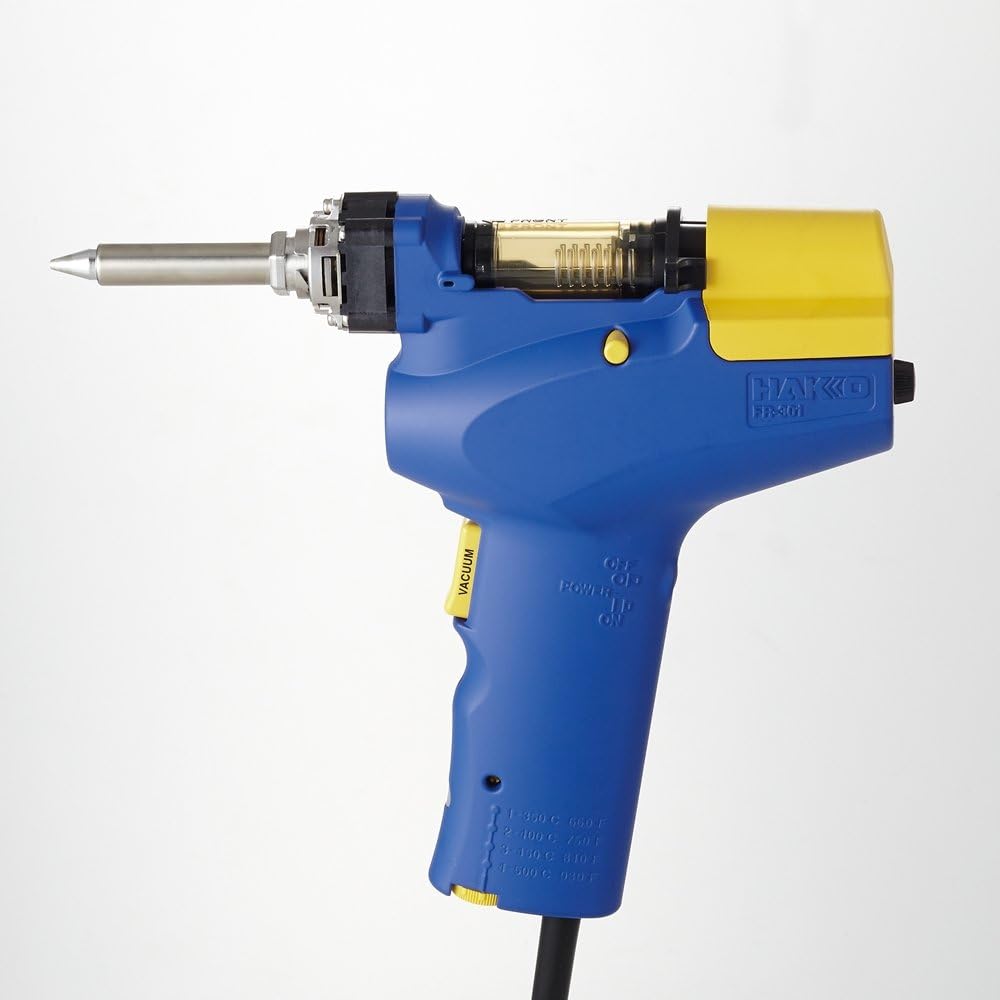
This is a professional-grade desoldering gun. It has a built-in heating element and a motorized vacuum pump. You place the hollow, heated tip over the component leg, wait for the solder to melt, pull the trigger, and the pump violently slurps the solder into an internal collection chamber.
Why it matters for Beginners: Honestly? A beginner doesn’t need this. It is an expensive investment. But it shows you what the “endgame” of desoldering looks like.
Why it matters for Pros: Time is money. The FR-301 can desolder a 40-pin chip in under 60 seconds with zero risk of lifting a pad. It features quick-change nozzles and a highly accurate temperature control dial embedded in the handle, preventing you from overheating sensitive vintage PCBs.
- Best For: Professional repair techs, retro-computing enthusiasts, and high-volume salvage operations.
- Get it here: Hakko FR-301 on Amazon
The Verdict
For a beginner, the ultimate combination is the Engineer SS-02 and a roll of Chemtronics Soder-Wick. The SS-02 handles the heavy lifting, and the wick cleans up the mess. That combo will tackle 95% of the desoldering tasks you encounter in standard electronics projects.
However, if you ever find yourself dedicating your weekends to repairing vintage electronics or salvaging components from old motherboards, the Hakko FR-301 is the single greatest quality-of-life upgrade you can add to your workbench.
Happy hacking, and may your solder pads never lift!