Ever wonder how a 12V wall adapter can safely run a fragile 5V microcontroller without releasing the magic smoke? It’s all about power regulation. Today, we’re diving into the unsung heroes of the workbench: voltage regulators. They take terrifyingly high voltages and aggressively squash them down to something safe, mostly by turning the excess power into heat.
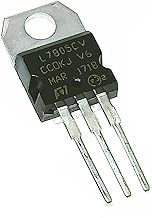
Linear Regulators: The Simple Workhorses
Linear regulators, like the ubiquitous LM7805, are the go-to choice for simple, low-noise power delivery. They are cheap, require very few external components, and are incredibly easy to use. However, they have one major catch: thermal considerations.
Linear regulators work by burning off the excess voltage as heat. The larger the voltage difference between the input and the output, and the more current your circuit draws, the hotter the regulator gets. If you try dropping 12V down to 5V while pulling an amp of current, your regulator will quickly turn into a tiny, unwanted space heater—and might even shut down or fail if not properly heatsinked.
Switching Regulators: The Efficient Alternatives
When you need to drop a lot of voltage or supply a lot of current, you want a switching regulator (often called buck or boost converters). Instead of burning off excess voltage, they rapidly switch the power on and off, using inductors and capacitors to smooth out the output.
Here are the key takeaways for switching regulators:
- High Efficiency: They can often hit 85-95% efficiency, meaning much less heat generation and longer battery life.
- Versatility: “Buck” converters step voltage down, while “Boost” converters can actually step voltage up (e.g., getting 5V out of a 3.7V lipo battery).
- Complexity: They require more external components (inductors, diodes, capacitors) and careful PCB layout to minimize electrical noise compared to linear regulators.
- Noise: Because they switch rapidly, they can introduce ripple and noise into your circuit, which might be problematic for sensitive analog sensors or audio applications.
Which should you choose?
- Use Linear Regulators when the voltage drop is small, the current draw is low, or your circuit is extremely sensitive to noise.
- Use Switching Regulators when dealing with large voltage drops, high current demands, or when battery life is critical.
Keep your circuits powered safely and efficiently, and I’ll see you in the next lesson!
Hardware You’ll Need
To follow along with this lesson, you’ll need the following components: