Today we are taking a leap into one of the most versatile components in electronics: the Operational Amplifier, or Op-Amp. If you’ve ever wanted to add “decision-making” logic to your circuits without resorting to an Arduino and its inevitable software updates, you’re in the right place. It’s analog logic, it’s brilliant, and the math will make you cry. Let’s dive in!
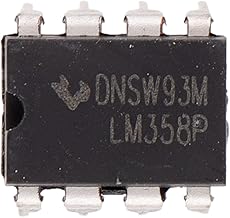
What is an Op-Amp?
At its core, an Operational Amplifier is a high-gain electronic voltage amplifier with a differential input and, usually, a single-ended output. While they can perform a vast array of mathematical operations (hence the name “operational”), one of their simplest and most powerful applications is acting as a comparator.
The Op-Amp as a Comparator
A comparator does exactly what it sounds like: it compares two voltages. By feeding two different voltage signals into the Op-Amp’s inputs (the inverting - and non-inverting + inputs), the Op-Amp will output either its maximum or minimum voltage depending on which input is higher.
Here is why using an Op-Amp as a comparator is so incredibly useful:
- Hardware Logic: It allows your circuit to make a simple “yes/no” or “high/low” decision based purely on analog voltage levels.
- Sensor Thresholds: You can easily set a threshold voltage using a potentiometer. If a sensor’s output (like a light-dependent resistor or a temperature sensor) crosses that threshold, the Op-Amp triggers an action, like turning on an LED or a cooling fan.
- Signal Conditioning: It’s perfect for converting messy, fluctuating analog signals into clean, sharp digital square waves.
- Cost-Effective: Op-Amps are incredibly cheap and don’t require programming, saving you the hassle of adding a microcontroller to a simple project.
By understanding the comparator circuit, you unlock a whole new level of control in your hardware designs. In our next lesson, we’ll build our very first Op-Amp comparator circuit on a breadboard. Stay tuned!
Hardware You’ll Need
To follow along with this lesson, you’ll need the following components: