Welcome back to our journey with the 555 timer! We already made it blink endlessly. Today, we’re going to look at its other superpower: Monostable mode, where it does exactly one thing, once, and then refuses to help further until you poke it again. It acts as a “one-shot” pulse generator. It’s incredibly useful for turning messy, jittery human button presses into a single, clean electronic pulse. Finally, a component that cleans up after you.
Why Use Monostable Mode?
Here are some of the most common reasons you’ll wire up a 555 timer in Monostable mode:
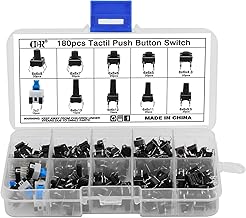
- Switch Debouncing: Mechanical switches literally “bounce” on a microscopic level when you press them, creating a rapid, messy burst of electrical noise instead of a single click. A 555 in monostable mode “swallows” this noise and outputs one single, perfectly clean pulse.
- Time Delays: Need a porch light to stay on for exactly 30 seconds after a button is pressed, or a relay to hold a door open? Monostable mode makes this simple.
- Missing Pulse Detection: By continuously re-triggering the timer before it finishes its cycle, you can build a circuit that sounds an alarm if a rhythmic pulse (like a heartbeat or a machine cycle) suddenly stops.
- Predictable Timing Control: The exact duration of the HIGH output pulse is determined entirely by the values of a single resistor ($R$) and capacitor ($C$) connected to the chip, calculated with the simple formula: $T = 1.1 \times R \times C$.
Next time, we’ll calculate our resistor and capacitor values and wire up a functioning one-shot monostable circuit right on our breadboard. Grab your components, and we’ll see you there!
Hardware You’ll Need
To follow along with this lesson, you’ll need the following components: