If there is one circuit you will see everywhere—and I mean everywhere—it’s the voltage divider. Whether you’re trying to step down a 5V signal so your 3.3V microcontroller doesn’t violently combust, or reading an analog sensor, voltage dividers are your best friend. They are also the reason your battery dies faster than expected. Let’s learn to divide.
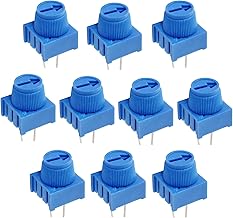
What is a Voltage Divider?
A voltage divider is a simple linear circuit that turns a large voltage into a smaller one. Using just two resistors in series, we can create an output voltage that is a fraction of the input voltage.
The Magic Formula
The math behind a voltage divider is straightforward. If you have an input voltage (Vin) connected across two resistors in series (R1 and R2), and you measure the output voltage (Vout) across R2, the formula is:
Vout = Vin * (R2 / (R1 + R2))
Here is what you need to keep in mind:
- R1 is the “top” resistor (connected to the input voltage).
- R2 is the “bottom” resistor (connected to ground).
- The ratio of R2 to the total resistance determines how much voltage is “dropped” across R2.
Why Do We Need Them?
Voltage dividers are incredibly useful for several reasons:
- Level Shifting: Safely stepping down logic levels (e.g., from 5V down to 3.3V) for communication between different microcontrollers or sensors.
- Reading Resistive Sensors: Sensors like LDRs (Light Dependent Resistors) or thermistors change their resistance based on their environment. By placing the sensor in a voltage divider, that changing resistance becomes a changing voltage, which an Analog-to-Digital Converter (ADC) can easily read!
- Setting Reference Voltages: Providing a specific, stable voltage reference for comparators or op-amps.
Remember, voltage dividers are great for signals, but terrible for power supplies. Don’t try to power a heavy load using a voltage divider, or your output voltage will drop significantly and things will get hot!
Hardware You’ll Need
To follow along with this lesson, you’ll need the following components: