If you’ve ever built a circuit that refused to work, congratulations! You’ve just met the most dramatic diva in electronics: Electricity. ⚡
Electricity is predictable, but it’s also incredibly lazy. It always follows the path of least resistance (much like a house cat avoiding affection). If there is an unintended shortcut in your wiring, it will take it—this is called a short circuit. If the path is broken, it will ghost you faster than a bad date—this is an open circuit.
To understand how circuits work (and why yours isn’t), you need to know three core rules of the drama:
The Three Basic Rules
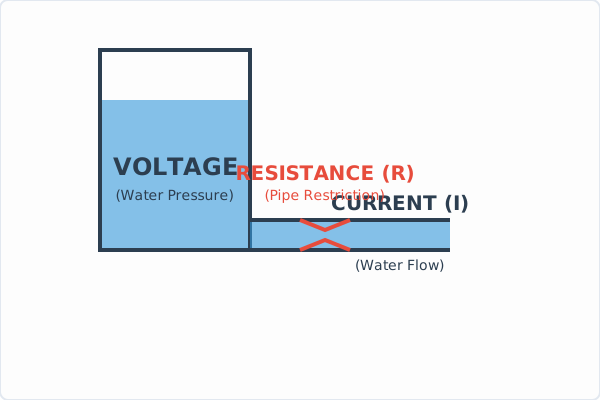
- Voltage (V): Think of voltage as the pushy friend who insists on moving forward. It’s the pressure that forces electricity through a wire. Without voltage, nothing moves.
- Current (I): This is the friend who actually does the moving. It’s the physical flow of electrons traveling through the circuit to do the work (like lighting up an LED).
- Resistance (R): This is the grumpy security guard slowing everyone down. It restricts the flow of current, ensuring components don’t receive too much power and explode.
Ohm’s Law
These three concepts are tied together by Ohm’s Law: V = I × R (Voltage equals Current multiplied by Resistance).
Ohm’s Law is the ultimate gossip—spill the voltage and the resistance, and it’ll tell you exactly what the current is doing. If you know two of these values, you can always calculate the third. This equation is the most important tool you have for designing safe and functional circuits.
So the next time your project won’t turn on, just remember: Electricity is like a teenager—it only does what it wants to do, not what you tell it to do. Double-check your connections to ensure the voltage has a clear, controlled path to flow!
Recommended Gear:
- Digital Multimeter - Essential for measuring V, I, and R in your circuits.
- Basic Electronics Starter Kit - Includes breadboards, wires, and components to practice Ohm’s Law.